Tactical Tuesday 2
Documenting Federal Chaos in Real Time
Keller Easterling taught us that infrastructure is not just pipes and wires—it’s protocols, dispositions, and repeatable spatial behaviors. In her world, power doesn’t always scream; it whispers through zoning codes, logistics hubs, and invisible defaults. But what if we flipped the script? What if visibility itself became a civic protocol?
Enter Ushahidi: The Civic Visibility Stack
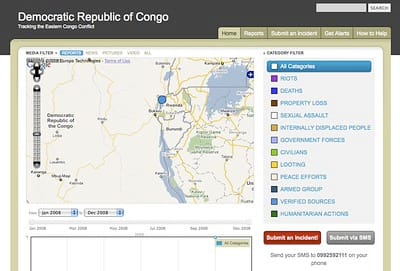
Originally built to map post-election violence in Kenya, Ushahidi is now a global platform for crowdsourced testimony, a real-time, geospatial engine for civic witnessing. It’s not just software. It’s a spatial operating system for contested terrain.
What it does:
- Collects reports via SMS, web, and social media
- Maps incidents of intimidation, misinformation, or access barriers
- Verifies reports through local actors
- Visualizes civic resilience in real time
Why Now, Why Here
In cities like Portland and Chicago, the reappearance of federal agents and militarized posturing is not just a security issue it’s a narrative tactic. Fear is being deployed as infrastructure. But fear thrives in silence. Ushahidi breaks that silence.
As we approach the 2026 midterms, we face:
- Quasi-lega redistricted battlegrounds (TX, NC, WI)
- Historically contested zones (ATL, Detroit, Philadelphia)
- Emerging pressure points (AZ, NV,)
These are not just electoral flashpoints. They are urban theaters and they demand a new choreography.
What We Propose
Deploy Ushahidi in coalition with:
- Local civic actors (verification + activation) (local governments, NGOs, parties, issue groups)
- Narrative strategists (amplification + ritual design)
This is not a protest. It’s a platform. Not a hotline. A choreography. Not a watchdog. A witness grid.
We already know the DOJ plans to send "election observers" to cities like Los Angeles. Our local municipal leaders and precinct captains need to be getting ready. Today.